

How to write when everything's falling apart
What helps me make art in overwhelm

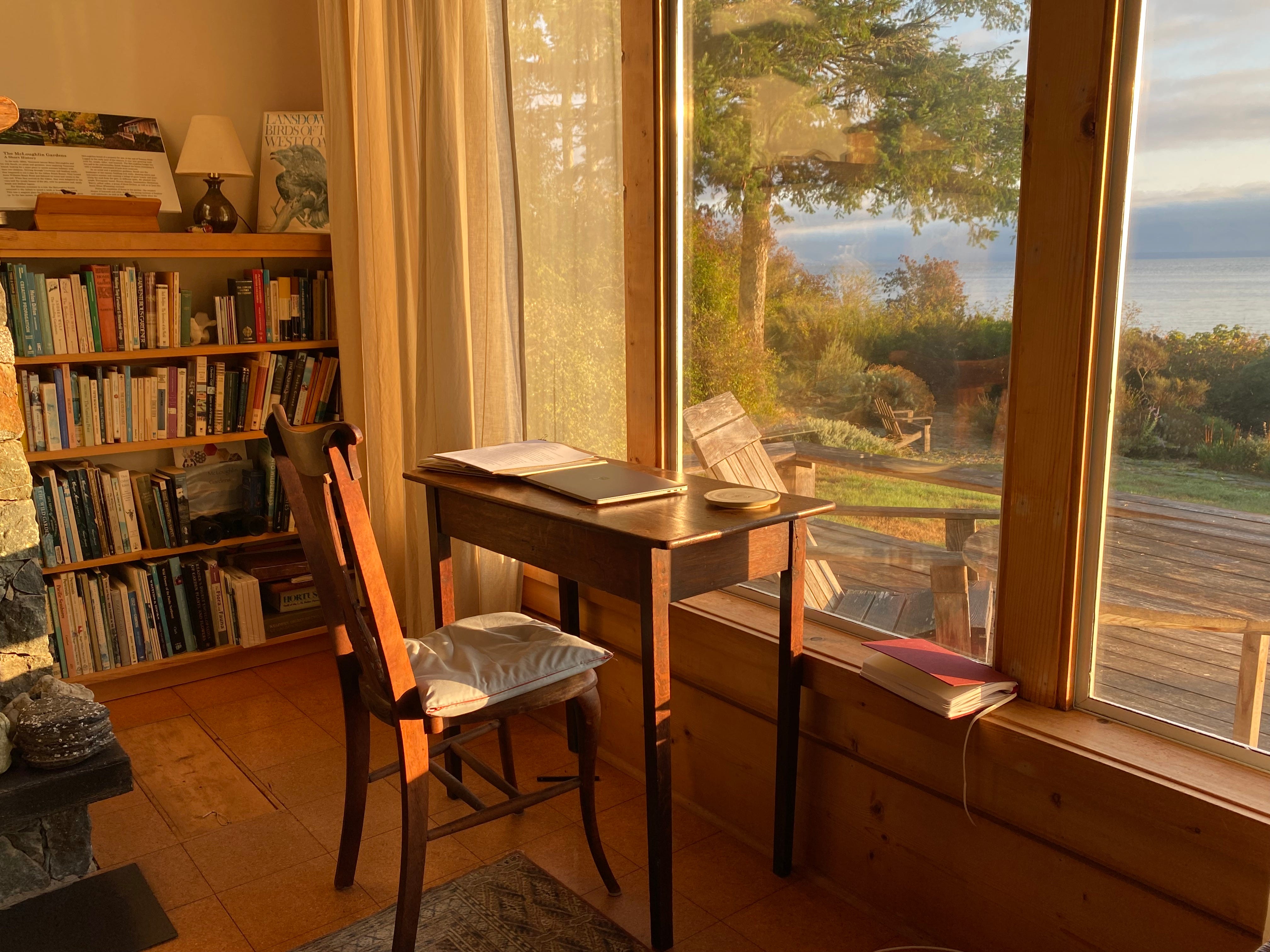
I’m not sure how I’ve managed to still write.
Without going into vulnerable details, we’ve experienced a series of events beyond our control. Add to that a piercing loss of a loved one, together they shook our family to the core. And given the serious downs of political threats and violence, its been hard to have any extra energy for my book project.
Honestly, it’s sucked.
And yet, somehow I’ve been able to make progress.
In a year and a half, I’ve managed to draft a book proposal, a prologue, an introduction and thirteen chapters. Along the way, I’ve walked and skied hundreds of kilometers through the twists and tears of doubt. I’ve rewritten chapters, lost huge sections by accident, and thrown out and re-envisioned the entire second half.
The journey has taught me more about myself than I imagined. I’ve made peace with my discovery-style of writing, despite solid advice, which refuses well-crafted structure. I’ve learned to welcome and trust a way of thinking and writing that is unpredictable and synergistic. I think best with the poplars, poets and philosophers who offer shade in a world of hot takes. I’ve come to trust that writing takes time and good writing takes work.
*
Since I promised to offer an inside peek into the ups and downs of a first-time book project, here’s what’s helped me keep going– even when it would be tempting to stop.
Most days, I get up and make my bed. Stoke the fire and meditate. Feed the dog, tidy the kitchen and get lunch ready for my daughter. I go to work and journey with top-notch clients, thinkers on my podcast, and when able, sit my ass down at my kitchen table and write.
I want to emphasize that I do none of this perfectly. Like many of us, I feel the tug between generating income and making art in the midst of existential angst.
But no matter the stretch, somehow I’ve been able to pick up the pen and write.
Here are 9 things that have helped:
Embrace beginnerdom. Janet Fitch, author of the famous novel White Oleander, says that no matter if you’ve written one, two or twenty books the act of making is vulnerable. You start fresh every time. Taking her advice, I’m cutting out a large “L” (for Learner) like they do for young drivers. I’m going to paste it on the back of my laptop to signal gentleness to the parts of myself that don’t know what to do.
Ask for help: I find it hard to ask for help, especially if I think I should know better. I get sweaty and confused, uncertain about what I need. But my partner, friends, sister and parents and teachers in my life, are patient. They offer me time and non-judgment, so I can fumble my way toward the ask. With them, I experience a bedrock of care so I can give it to myself when the inner critic gets ugly: don’t compare, keep going, follow your own path, enjoy the process, share your work.
Feel it All: I lean on my decades-long embodiment and somatic training. I have more courage to face my worry and fear about making something vulnerable like a book. Facing means feeling fully. I untangle the tight braid of thought, feeling and sensation and stay with whatever sensation is in my chest, thighs, jaw or shoulders. To do that, I need long walks with the dog. I follow sensation like a diviner, until it eases. I honor what’s right about what I’m feeling, then move into action: a re-write, a deletion, a vulnerable share or chapter outline.
Gather in Creative Circles: I gather with a small circle of creatives in my home town. We meet monthly for fancy cheese and wine to share our poetry, visual art, and writing. We share first drafts, wild visions, tender dreams and quiet doubts. I also get myself to monthly gatherings of Yukon poets and writers, who share with a wider circle of avid readers. Both are an invaluable source of receptivity, community and friendship.
Listen: I listen to conversations about craft, joy and torture of writing. Ha! Yes it can feel like torture. Recently, I’ve been enjoying the Memoir Nation podcast with Brooke Warner and Grant Faulkner. Together, they create conversations that feel like a roaring campfire, offering craft advice with generosity, especially on the days I feel like giving up.
Be Useful: My regular writing practice comes in handy for political activism. Words flow more easily when I’m inclined to bang out a letter to my Member of the Legislative Assembly (MLA)– most recently on our territorial government’s position to opt out of the national gun buy-back program. Using my gift to take small actions on local issues helps enliven my political agency.
Meditate: I try and meditate as often as discipline and devotion allow– ideally in the mornings. The Tibetan Buddhist teacher Chögyam Trungpa Rinpoche says that we can approach our art with the subtle demand of mindfulness or open awareness. When I let go of any demand to “get somewhere”, even mindfully, I can appreciate the bewildering pleasure of channeling word to page.
Share: When I cross the invisible line between working solo and sharing my work, I experience the whole point of this writing thing. The surprises that happen between aloneness and community is where I feel the deepest satisfaction. I must again and again, come out of hiding.
Read challenging work: I read writers and thinkers who challenge my view of the world or how a book ‘should’ be written. This encourages me, more than anything, to trust my instincts and go off script like so many off-beat, visionary writers have done before me.
Now over to you (here catch my ball!)
As you witness or experience scary and/or challenging things in your life, what helps you stay in relationship with your art? What helps you abate shock, freeze and overwhelm? When you manage to continue to practice your art, in whatever form, what have you discovered?